Raman Spectroscopy: A "Fingerprint" Technology Revealing the Molecular World
Raman Spectroscopy: A "Fingerprint" Technology Revealing the Molecular World
Fundamental Principles of Raman Spectroscopy
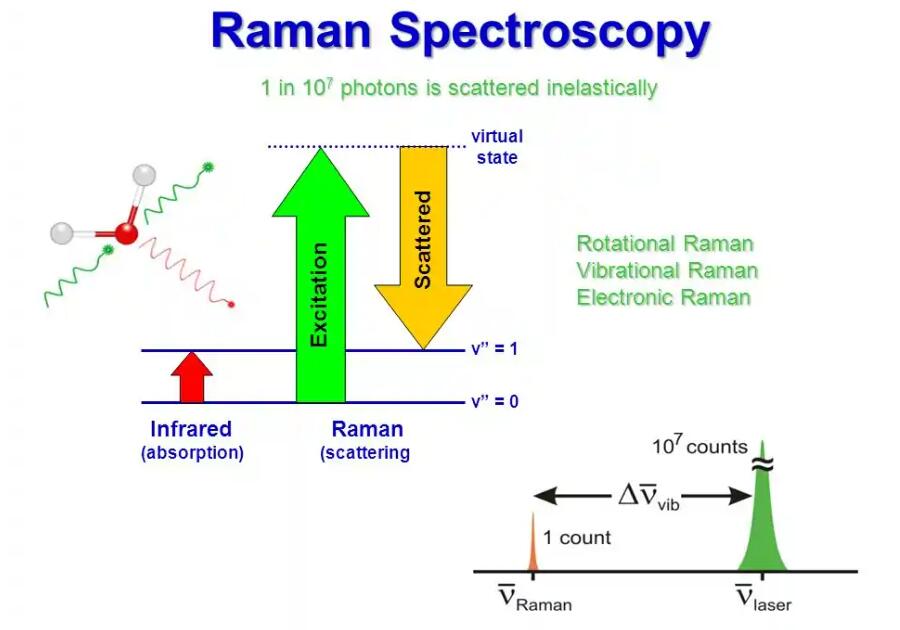
Raman spectroscopy is a molecular analysis technique based on light scattering, discovered by Indian scientist C.V. Raman in 1928. Its core lies in the inelastic scattering phenomenon:
When a monochromatic laser irradiates a sample, most photons undergo elastic scattering (Rayleigh scattering) with no wavelength change.
Approximately one in a million photons interacts with molecules, resulting in inelastic scattering (Raman scattering), where the wavelength shifts correspond to changes in molecular vibrational or rotational energy levels.
These energy shifts form a unique Raman spectrum, serving as a "chemical fingerprint" of the substance.
Raman Spectroscopy vs. Infrared Spectroscopy
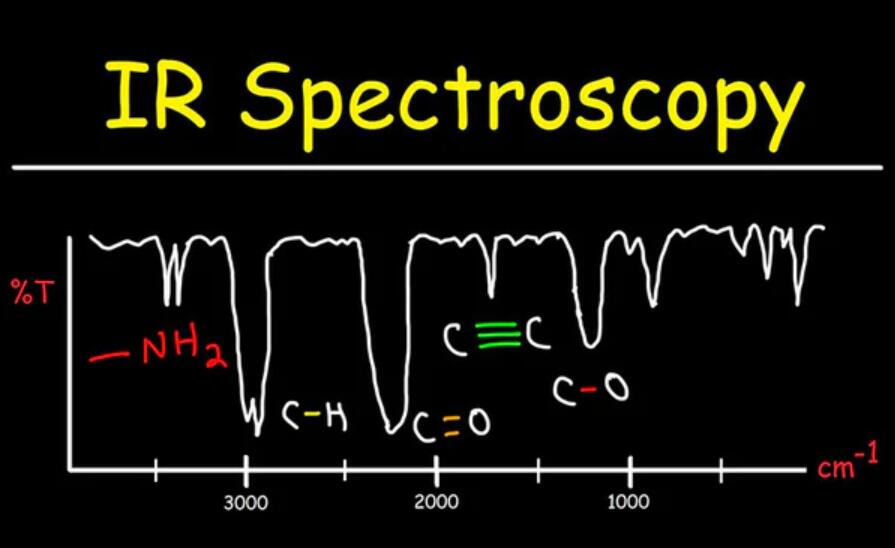
Both Raman and infrared (IR) spectroscopy analyze molecular vibrations but are complementary:
|
Feature
|
Raman Spectroscopy
|
Infrared Spectroscopy
|
|
Bond Type
|
Non-polar bonds (C=C, S-S) & symmetric vibrations
|
Polar bonds (O-H, C=O) & asymmetric vibrations
|
|
Sample Prep
|
No complex preparation; suitable for aqueous solutions
|
Water interference; higher preparation requirements
|
|
Detection
|
Non-destructive; applicable to solids, liquids, gases
|
Some samples require grinding or pelletizing
|
Key Applications of Raman Spectroscopy
(1) Materials Science
- Analyzing structural defects in carbon materials (graphene, carbon nanotubes).
- Studying molecular composition of semiconductors, polymers, and ceramics.
(2) Biomedical Science
- Cancer Diagnosis: Detecting biochemical changes in tumor tissues (e.g., real-time analysis during brain surgery).
- Drug Development: Monitoring crystallization states of active pharmaceutical ingredients.
(3) Environmental & Food Safety
- Detecting microplastics and pollutants (e.g., pesticide residues).
- Identifying food additives or adulterants (e.g., honey purity).
(4) Archaeology & Art Authentication
- Non-destructive analysis of ancient pigments, ceramic glazes, and ink compositions.
Cutting-Edge Technological Advances
(1) Surface-Enhanced Raman Scattering (SERS)
- Enhances signals via gold/silver nanostructures, boosting sensitivity by 10⁶–10¹⁴ times.
- Applications: Single-molecule detection, trace screening of drugs/explosives, cancer biomarker analysis.
(2) Spatially Resolved Raman Imaging
- Combines microscopy to map chemical composition distribution (e.g., drug localization in cells).
(3) Time-Resolved Raman Spectroscopy
- Femtosecond lasers track ultrafast molecular dynamics (e.g., photochemical reactions, protein folding).
(4) Hybrid Techniques
- Raman-AFM: Simultaneously captures topography and chemical data.
- Raman-Mass Spectrometry: Integrates structural analysis with compositional identification.
Artificial Intelligence & Future Trends
- Machine Learning: Automates complex spectrum interpretation (e.g., high-throughput blood sample screening).
- Portable Devices: Smartphone-integrated Raman sensors for on-site testing.
- Challenges: Improving sensitivity (e.g., 2D material SERS substrates) and reducing costs.
Conclusion
With its non-destructive, highly specific, and versatile advantages, Raman spectroscopy has become a cornerstone analytical tool in chemistry, materials science, and biomedicine. Advances in SERS, AI-assisted analysis, and other technologies will continue to expand its applications, driving innovation in precision medicine, smart sensing, and nanotechnology.
X-rays: The Mysterious Light That Penetrates Matte
Microscopic Tech: Exploring the Invisible Wonders of Technology Brief Description