X-rays: The Mysterious Light That Penetrates Matte
X-rays: The Mysterious Light That Penetrates Matte
X-rays are a type of short-wavelength, high-energy electromagnetic wave accidentally discovered by German physicist Wilhelm Röntgen in 1895. Due to their strong penetrating ability, X-rays quickly found widespread applications in medicine, industry, and scientific research.
Discovery and Nature of X-rays
While studying cathode rays, Röntgen observed an unknown type of radiation that could pass through opaque materials and cause fluorescent screens to glow. Unsure of its nature, he named it "X-ray" (with "X" representing the unknown). Later, scientists confirmed that X-rays are electromagnetic waves with wavelengths between ultraviolet and gamma rays, typically produced when high-speed electrons strike a metal target.
Revolution in Medical Imaging
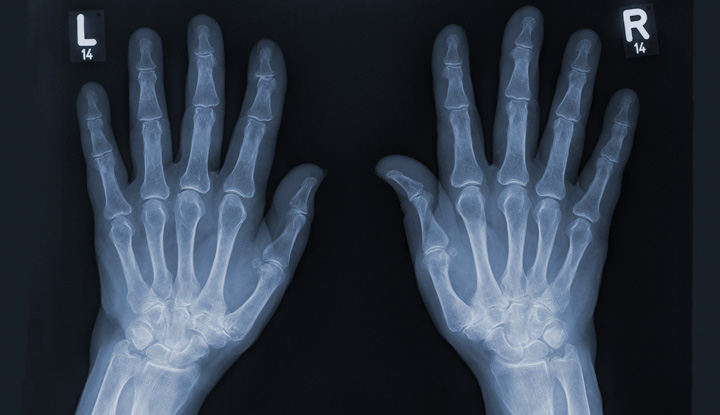
The most well-known application of X-rays is in medical imaging. Traditional X-ray images clearly reveal bone structures, aiding in the diagnosis of fractures, pneumonia, and other conditions. Computed tomography (CT) scans use X-rays from multiple angles to construct 3D images, providing detailed views of organs and tumors.
Industrial and Security Inspections
In industry, X-rays detect internal defects in metal castings and welds, ensuring product quality. Airport security also relies on X-ray scanners to identify hazardous items in luggage.
A Powerful Tool in Scientific Research
X-ray crystallography (e.g., XRD) is a key technique for studying atomic structures. The discovery of the DNA double helix depended on X-ray diffraction data. Synchrotron radiation sources provide high-intensity X-rays, advancing research in materials science and biology.
Radiation Risks and Protection
Although X-rays are highly useful, excessive exposure can damage cells and increase cancer risks. Therefore, doctors and patients must take precautions such as lead shielding and limiting exposure time. The International Commission on Radiological Protection (ICRP) has established strict safety standards.
Conclusion
From Röntgen’s accidental discovery to modern high-tech applications, X-rays have profoundly transformed human life. In the future, with technological advancements, X-rays will play an even greater role in nanotechnology, quantum research, and beyond.
Raman Spectroscopy: A "Fingerprint" Technology Revealing the Molecular World