Coal Analysis

Coal Analysis
NIR diffuse reflectance spectroscopy is an efficient analytical method widely used in the coal mining sector. By analyzing the spectral characteristics of coal, important information about moisture, mineral composition, and organic content can be obtained, providing a scientific basis for assessing coal quality and utilization.
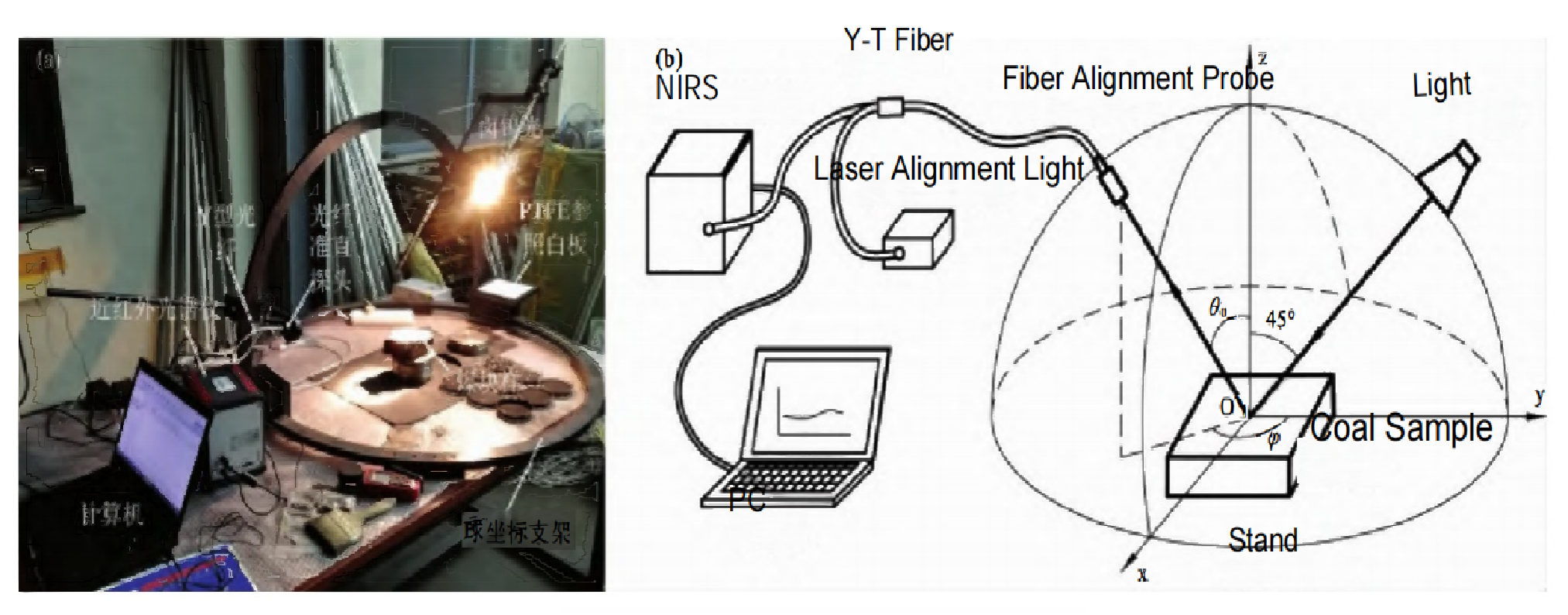
Principle
NIR diffuse reflectance spectroscopy is based on the specific absorbance characteristics of molecules to near-infrared light. Different molecular components absorb light at specific wavelengths, producing characteristic absorption peaks in the spectrum. The moisture content in coal shows significant absorption valleys around 1400 and 1900 nm, while Al-OH groups in clay minerals exhibit features near 2200 nm. Additionally, the bending and stretching vibrations of organic components, such as CH₃ and CH₂ side chains and C-H structures, generate absorption peaks primarily around 1700 and 2300 nm, reflecting the chemical composition of coal.
In NIR spectroscopy, moisture in coal exhibits significant absorption valleys around 1400 and 1900 nm. These absorption peaks indicate the presence of moisture, which is crucial for assessing the moisture content of coal. Moisture content affects not only the combustion performance and calorific value of coal but also its transportation and storage. Therefore, accurately measuring moisture content helps optimize coal usage efficiency and reduce transportation costs.
Common clay minerals in coal, containing Al-OH groups, also show absorption features near 2200 nm. Analyzing this characteristic helps identify the types and contents of minerals in coal. Understanding the mineral composition aids in evaluating the physical and chemical properties of coal, thereby influencing its processing and utilization. For instance, higher mineral content may lead to increased ash and pollutants during combustion, making the identification and control of mineral components a critical aspect of coal mine management.
Organic components in coal also have unique absorption characteristics in the near-infrared spectrum. For example, the CH₃ and CH₂ groups in fatty side chains, as well as C-H bending and stretching vibrations in aromatic structures, generate combined and harmonic frequencies that appear mainly around 1700 and 2300 nm. These features are closely related to the organic matter content in coal and reflect its chemical structure and energy content. Analyzing these absorption characteristics can help understand the type of coal (such as bituminous or lignite) and its calorific value, providing a basis for coal classification and market evaluation.
|
Coal Sample Type
|
Industrial analysis%
|
|||
|
Carbon
|
Volatile
|
Ash
|
Moisture
|
|
|
Anthracite No. 1
|
91.28
|
26.2
|
4.67
|
1.43
|
|
Lean Coal
|
73.16
|
16.59
|
8.61
|
1.64
|
|
Gas Coal
|
58.67
|
29.98
|
9.38
|
1.97
|
|
Lignite No. 2
|
34.69
|
40.45
|
21.05
|
3.81
|
Application
-
On-Site Monitoring: Real-time monitoring of moisture and mineral composition during coal mining and transportation ensures coal quality and optimizes resource utilization.
-
Quality Assessment: By analyzing the spectral characteristics of coal, the calorific value, ash content, and volatile matter can be evaluated, helping companies formulate reasonable sales and processing strategies.
-
Environmental Management: Monitoring changes in coal composition helps control pollutants generated during coal combustion, reducing environmental impact.
-
Storage and Transportation: Assessing the moisture content of coal aids in optimizing storage conditions and reducing quality losses due to excessive moisture.
By integrating the spectral features of moisture, mineral composition, and organic components, NIR diffuse reflectance spectroscopy enables comprehensive analysis of coal. The rapid and non-destructive nature of this technology allows for real-time on-site testing throughout the coal mining, processing, and transportation stages. Comprehensive spectral data can improve coal utilization efficiency and reduce environmental pollution, promoting sustainable development.
The application of near-infrared diffuse reflectance spectroscopy in coal analysis provides a scientific and effective method for assessing coal quality and composition. Through the analysis of moisture, minerals, and organic components, the coal mining industry can achieve more efficient resource management and environmental protection. Continued research and application of this technology will strongly support the sustainable development of the coal mining industry in the future.

Brix Analysis
Laser Analysis