Gemstone Measurement
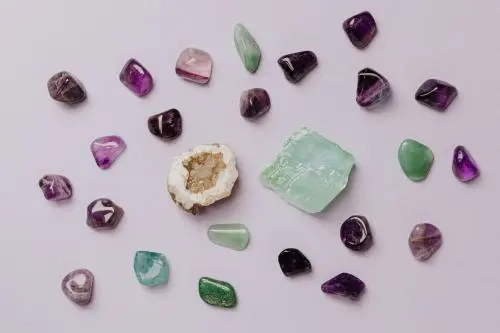
Gemstone Measurement
Spectroscopic measurement has recently become a vital method for verifying the authenticity of gemstones. This technique utilizes transmission and reflection measurements to perform full-wavelength analysis, allowing comparisons with standard spectra of genuine gemstones. Such comparisons serve as key evidence for determining gemstone characteristics.
Principle
Natural and synthetic diamonds can be identified using light in the wavelength range of 400 to 750 nm. Natural Type Ia diamonds exhibit characteristic absorption wavelengths at 415 nm and 478 nm, while synthetic diamonds reveal detectable wavelengths at 592 nm and 741 nm. The amplitude of absorption peaks between natural and synthetic diamonds differs by nearly tenfold, making this a reliable distinguishing feature. This method is also applicable to other gemstones, including rubies, emeralds, and sapphires.
Typical Measurement Setup
A typical gemstone measurement system consists of:
-
Spectrometer: The core device for capturing spectral data.
-
Reflective Whiteboard: Provides a consistent reflection surface for accurate measurements.
-
Reflective Fiber Optic Probe: Connects the spectrometer to the gemstone, facilitating light collection.
-
Halogen Light Source: Illuminates the gemstone to enhance visibility of spectral features.
-
Reflective Integrating Sphere: Ensures uniform light distribution during measurement.


Applications
-
Gemstone Authentication: The primary application of spectroscopic measurement is to determine the authenticity of gemstones, effectively distinguishing natural gems from synthetic ones.
-
Quality Control: Jewelry manufacturers employ this method during production to ensure the quality and authenticity of stones used in their products.
-
Research and Development: In gemological research, spectroscopic techniques aid scientists in studying the properties of various gemstones and developing new synthetic gemstones.
-
Market Valuation: Gem appraisers utilize this technology to accurately assess the value of gemstones based on authenticity and quality, providing essential information for buyers and sellers.
-
Educational Purposes: Educational institutions teach students about gemstone properties and identification techniques, enhancing their understanding of gemology.

Advantages
The use of spectroscopic measurement for gemstones offers several significant benefits:
-
Precision: Provides highly accurate identification and analysis of gemstone properties.
-
Non-Destructive Testing: The method does not damage the gemstone, preserving its integrity during testing.
-
Wide Applicability: Can be used to analyze various gemstones, making it versatile for different gemological applications.
-
Rapid Analysis: Enables quick assessments, crucial in high-demand environments like jewelry production and retail.
The application of spectroscopic measurement in gemstone analysis represents a significant advancement in gemology. By utilizing this technology, jewelers and gemologists can ensure the authenticity and quality of gemstones, supporting consumer confidence and industry standards. As the demand for reliable gemstone verification continues to grow, spectroscopic methods will play an increasingly important role in the field.
LED Sorting
Thin Film Measurement