Reflectance Measurement

Reflectance Measurement
Principle
Reflectance testing is an essential optical measurement technique used to evaluate a material's ability to reflect light effectively. When a light beam strikes a sample's surface, a portion of the light is reflected, while the rest may be absorbed or transmitted. The reflectance R is quantified using the formula: R=Ir/Ii
where:
-
Ir represents the intensity of reflected light.
-
Ii represents the intensity of the incident light.
Spectrometers capture the reflected light signal, allowing for comprehensive measurement of a material's reflectance characteristics across various wavelengths. This process involves integrating the light source with the sample and utilizing a detector to analyze the reflected light, providing critical insights into the material's optical performance at specific wavelengths.
Applications
-
Materials Science:
-
Assessing the reflectance performance of new optical materials, such as coatings, mirrors, and reflective surfaces.
-
Analyzing the surface properties of materials to determine their optical quality.
-
Solar Technology:
-
Testing the reflectance of solar cells and photovoltaic materials to enhance energy absorption efficiency.
-
Optimizing the design of photovoltaic systems to minimize light reflection losses.
-
Optical Instruments:
-
Evaluating the reflectance performance of optical components like lenses, prisms, and filters to ensure their effectiveness in applications.
-
Ensuring the high performance and accuracy of optical instruments.
-
Automotive Industry:
-
Testing the reflectance of automotive glass and body surfaces to optimize optical performance for safety and aesthetics.
-
Analyzing the impact of coatings and surface treatments on reflectance characteristics.
Advantages
Spectrometers provide several compelling advantages for reflectance testing:
-
High Sensitivity:
-
Capable of detecting subtle changes in reflectance, making them ideal for analyzing thin films and small materials.
-
Offers precise optical performance data to aid in material selection.
-
Wide Wavelength Range:
-
Facilitates measurements across a broad spectrum, from ultraviolet to near-infrared, accommodating various materials' optical characteristics.
-
Provides comprehensive data for optical analysis of materials.
-
Non-Destructive Testing:
-
The testing process is non-destructive, making it suitable for precious or sensitive materials.
-
Maintains sample integrity for subsequent testing or application.
-
Portability:
-
Modern spectrometers are designed for portability, allowing for on-site testing in various environments.
-
Convenient for researchers to conduct experiments under different conditions.
-
Real-Time Monitoring:
-
Capable of providing real-time reflectance data, ideal for monitoring dynamic processes.
-
Facilitates quick adjustments to experimental setups, enhancing overall efficiency.
Reflectance testing using spectrometers is a powerful analytical technique that delivers crucial optical performance data across multiple fields. Its high sensitivity, broad application range, and portability make it an indispensable tool in modern scientific research and industrial applications. By understanding the reflectance characteristics of materials, researchers can optimize material design and applications, driving technological advancement across various industries.
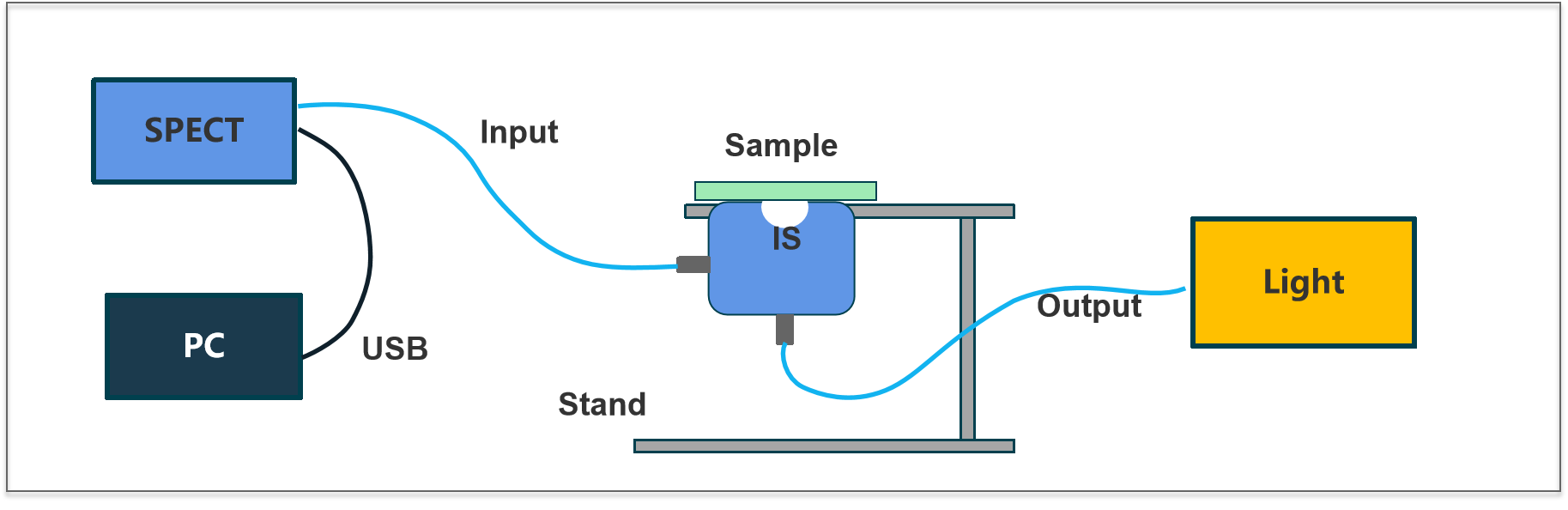
Two Optical Paths for Reflectance Spectrometer 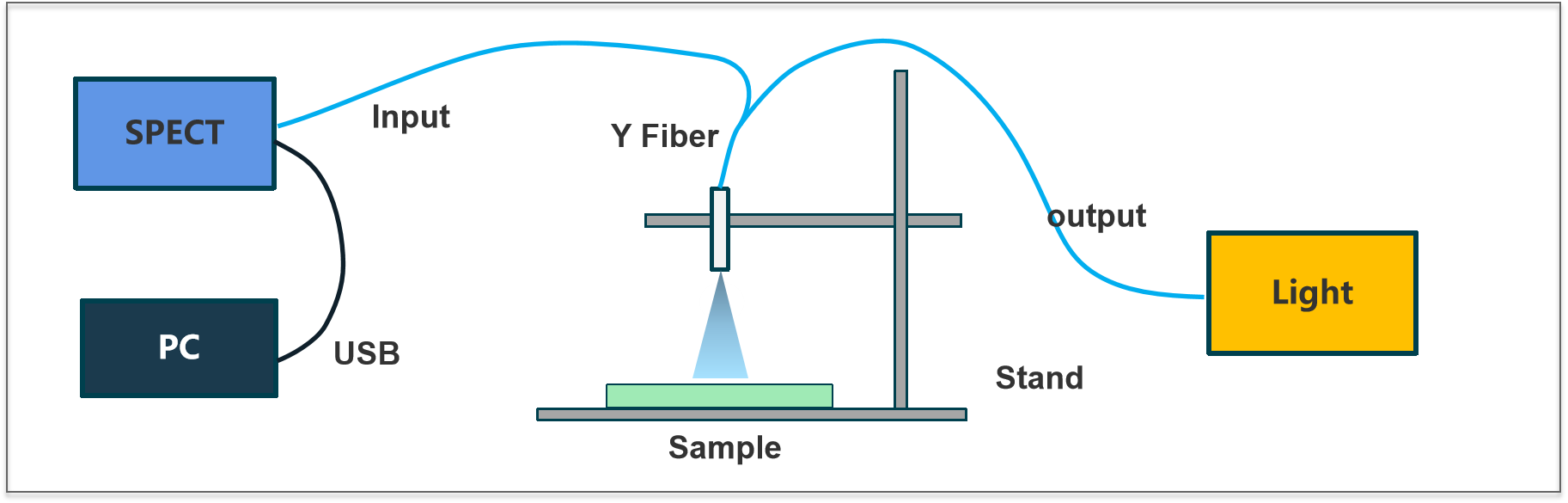

Leaf Reflectance Curve Data

Leaf Reflectance Curve
Transmission Measurement
Absorbance Measurement